
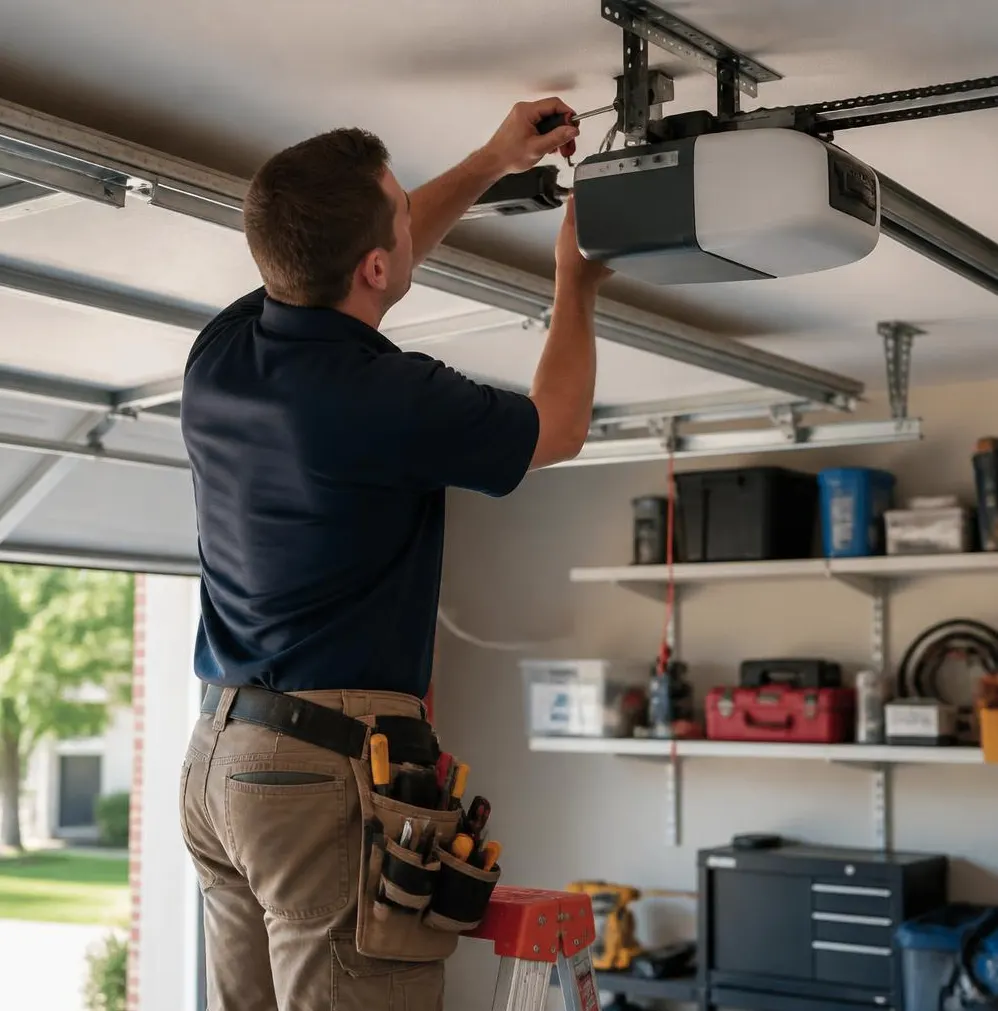
The short answer: use a silicone-based or white lithium garage door lubricant on the hinges, rollers, springs, and lock mechanism, applied every three to four months. Skip WD-40 as a long-term lubricant, skip grease on nylon rollers, and never pack grease into the tracks themselves. Here's how to do it correctly and why it matters more here than almost anywhere else in the country.
Why Lubrication Matters More in Delray Beach
Between the salt air rolling in off the coast, the humidity that sits heavy most of the year, and the afternoon downpours that soak exposed hardware, your garage door's moving parts take a beating. Springs, hinges, and rollers that would last years dry in a drier climate can start squeaking, binding, or rusting here within months if they're neglected. Lubrication isn't cosmetic maintenance; it's what keeps metal-on-metal friction from turning into rust, pitting, and eventually a spring or cable failure.
Tools You'll Need
- Silicone-based or white lithium garage door lubricant (spray can with a straw nozzle)
- Clean microfiber rags or shop towels
- A soft brush or vacuum attachment for the tracks
- Mild soap and water or a household degreaser
- A sturdy stepladder
- Safety glasses
Step-by-Step: How to Lubricate Your Garage Door
- Close the door and kill power to the opener. Unplug it or switch off the breaker so the door can't cycle while you're working on it.
- Clean before you lubricate. Wipe down the tracks, hinges, and rollers with a dry rag first, then a damp one if there's visible grime or salt film. Lubricating over dust and debris just creates a gritty paste that grinds down the hardware faster.
- Spray the hinges. Hit the pivot point of every hinge along both sides of the door, not the hinge plate itself. Work the door up and down by hand a few inches to let the lubricant soak into the joint.
- Lubricate the roller stems and bearings, not the wheels. If you have steel rollers, lubricate the bearing at the center. If you have nylon rollers, apply lubricant only to the metal stem and bearing, never the nylon wheel face, since nylon doesn't need it and grease on the wheel just collects dirt and wears it down faster.
- Coat the torsion spring(s). Spray a light, even coat along the full length of the spring coils above the door. This is the part most homeowners skip, and it's the part most exposed to rust from humidity since it sits in the open above the door.
- Treat the lock mechanism and any exposed bolts or hinges on the opener arm. A quick spray keeps the lock cylinder from seizing and prevents surface rust on exposed opener hardware.
- Wipe off excess lubricant. Any pooling or drips will just attract dust and pollen, especially with windows or vents nearby. A light coating is all you need.
- Restore power and cycle the door 3-4 times. Watch and listen. The goal is quieter, smoother operation with no new grinding, popping, or hesitation.
What to Use and What to Avoid
- Use: silicone-based garage door lubricant or white lithium grease spray formulated for garage doors. Both resist washout from humidity and won't gum up with dust the way heavier products do.
- Avoid WD-40 as a lubricant. It's a solvent and light rust penetrant, not a lubricant. It evaporates quickly and strips existing lubrication, which means you'll be reapplying constantly and leaving parts drier than before.
- Avoid standard automotive grease or petroleum jelly. These are too thick for small hinge and roller mechanisms, attract dirt, and can gum up in cooler temperatures or harden over time.
- Never lubricate the tracks themselves. The rollers ride inside the tracks, and grease on the track surface just collects grit that scrapes against the rollers every time the door moves. Clean the tracks with soap and water instead.
What a Homeowner Can Do vs. What Needs a Technician
Routine lubrication, like everything above, is safe and reasonable for most homeowners to handle on their own with the door closed and power disconnected. Where it crosses into technician territory:
- Torsion spring adjustment or replacement. Springs are under extreme tension. If a spring looks stretched, has a visible gap in the coil, or the door feels heavy and uneven when lifted manually, that's a repair job, not a lubrication job.
- Frayed or rusted cables. Lubricant won't fix a cable that's already damaged, and cables under tension can snap. This is a cable repair call.
- A door that's off track or binding badly. If lubricating hinges and rollers doesn't smooth things out and the door still grinds, hesitates, or has come off the track, the alignment issue needs a technician, not more spray.
- Wind-load rated hardware. If your door has reinforced bottom brackets or wind-lock hardware tied to hurricane-rated components, don't disassemble or over-adjust anything near those connection points. Lubricate the visible moving parts and leave structural hardware alone.
When to Call Delray Beach Garage Door Experts
If you've lubricated everything and the door still squeaks, sags, or struggles, or if you spot a spring with visible wear, a rusted or fraying cable, or a door that's genuinely off track, that's when it's time to call in a technician instead of reaching for another can of spray. We handle Garage Door Spring Repair and Garage Door Cable Repair regularly for homes affected by the coastal humidity and salt air that speed up corrosion on these parts, and we'll check the whole system, not just the symptom you noticed.
If you're in Delray Beach, Boca Raton, Boynton Beach, or anywhere along the coast from Highland Beach to Lake Worth Beach and your garage door needs more than a spray can can fix, give Delray Beach Garage Door Experts a call. We show up on time, diagnose it correctly, and get it done right the first time.